

Top 10 AI Prompts for Grungy Industrial Photography
Industrial grit meets surreal imagination in this hand-picked collection of ten AI image prompts. Each concept pushes visual boundaries by fusing heavy machinery, weathered textures, and raw urban decay with extraordinary fantasy, luxury, and cosmic elements. Whether you crave a mercury-desert market or a clockwork Renaissance library, these prompts deliver cinematic depth and photorealistic punch.
This set shares a common thread: richly detailed, atmospheric scenes that feel both grounded and otherworldly. You will learn how to bring out the oily sheen on bronze armor, the prismatic glow through stained-glass cities, and the fine embroidery on architectural couture. The guide covers composition, reference photos, tool recommendations, and practical fixes so your generated images match the ambitious vision behind every title.
What this grungy industrial photography prompt collection is asking for
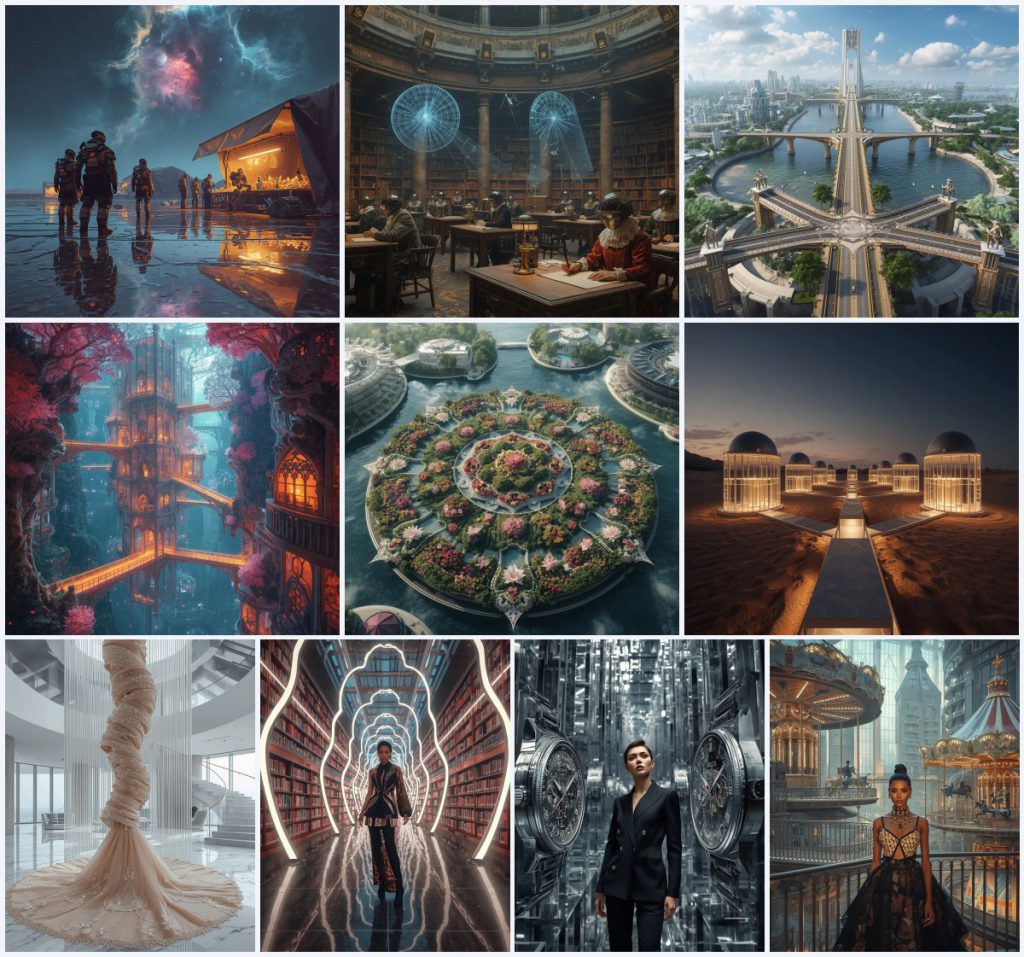
Across these ten prompts, the core demand is a fusion of heavy, tactile industrial surfaces with high-concept fantasy or luxury settings. You are instructing the AI to render weathered bronze armor plates, rusted brass gears, liquid mercury deserts, and colossal watch mechanisms as architectural landmarks. Every scene insists on ultra-detailed environmental storytelling where dirt, patina, and mechanical complexity coexist with glowing neon relics, holographic data beams, and floating floral mandalas.
- Weathered bronze and scrap fiber-optic mesh armor on nomadic traders
- Liquid mercury desert with perfectly reflective surface mirroring nebulae
- Rusted brass gears and ticking copper pistons forming infinite library shelves
- Gothic stained-glass panels pulsing with inner white light in a floating city
- Continuously ascending sculptural silk ribbons with pearl spirals on a couture gown
- Colossal luxury watches standing as maze walls with intricate mechanical details
Breaking down the shared industrial-fantasy scene
The visual world these prompts build is deliberately contradictory: decay and opulence side by side. In the mercury-desert market, "heavy, vacuum-sealed armor plates made of weathered bronze" catch the "intense, colorful nebulae above," while "jagged shards of solidified, pulsating neon light" glow against the mirrored ground. The clockwork library follows a similar logic, where "rotating, rusted brass gears and ticking copper pistons" support scholars whose "faces have their faces partially replaced by sleek, glowing chrome cybernetic masks."
Luxury and couture prompts intensify this clash. The spiral-staircase gown uses "sculptural silk ribbons supported by hidden transparent structures" inside a "contemporary tower gallery with floating staircases." Meanwhile, the watch-maze portrait places a model among "colossal luxury watches standing as architectural landmarks," their "reflective surfaces" catching every editorial light. Across all ten, the AI must balance raw materiality—rust, mercury, brass—with luminous, almost magical light sources.
Why these grungy industrial prompts produce unforgettable images
These prompts succeed because they force contrast at every level: texture, light, scale, and era. The AI gets clear, concrete nouns like bronze, mercury, and neon to anchor the rendering, while abstract concepts like infinity and surrealism push the composition into memorable territory. The result is images that feel like production stills from a film that does not exist yet, dense with narrative clues and tactile detail.
- High textural contrast between rough industrial materials and smooth glowing elements creates visual drama
- Specific material references like weathered bronze and liquid mercury give the AI precise surface instructions
- Cinematic scale and atmospheric lighting cues produce images with natural depth and editorial polish
Three artistic styles that fit this industrial photography collection
You can steer the output toward three distinct aesthetics without breaking the prompt’s core identity. Each style emphasizes different strengths already present in the scene descriptions, from raw texture to editorial glamour.
- Cinematic photorealism: Push the AI toward film-grain textures, dramatic chiaroscuro, and lens-like depth of field to make the mercury desert or clockwork library look like a high-budget movie frame.
- Hyper-detailed concept art: Ask for sharp, illustrative rendering that highlights every gear tooth, fiber-optic thread, and stained-glass fracture, ideal for the bioluminescent fractal forest or portal bridge.
- Editorial fashion photography: Apply high-contrast studio lighting, flawless skin rendering, and fabric sheen to the couture prompts, treating the watch maze or ribbon gown like a luxury magazine spread.
How to generate these grungy industrial images step by step
Start by copying one prompt title and its full text into your chosen AI image tool. The title sets the mood; the body supplies the materials. If the platform supports reference images, upload a photo that matches the lighting or texture you want, then let the AI blend that with the prompt. After generation, inspect hands, faces, and the main structural object—like the liquid mercury surface or the watch maze walls—for distortions, and re-roll with adjusted weightings if needed.
- Copy the prompt. Select one of the ten titles and paste its full description into the generation field exactly as written.
- Upload a reference photo. Add an image with similar lighting, material texture, or composition to guide the AI’s rendering engine.
- Set aspect ratio and style. Choose a cinematic wide ratio like 16:9 for landscapes or 4:5 for portraits, and pick a style preset if available.
- Generate initial batch. Run four variations to see how the AI interprets complex elements like the mercury desert or stained-glass city.
- Check hands and face. Zoom in on any human figures; look for extra fingers, asymmetrical eyes, or melted cybernetic mask edges.
- Refine and re-generate. Adjust prompt weight on tricky materials like liquid mercury or silk ribbons, then generate again until the main object reads clearly.
Choosing the right reference photo for industrial-fantasy prompts
A well-chosen reference photo anchors the AI in real-world physics, making surreal elements like floating cities or glowing relics feel believable. The reference does not need to match the subject; it should match the light, texture, or atmosphere you want the final image to inherit.
- Use a macro shot of rusted metal or oil-slicked water to inform the liquid mercury desert and weathered bronze armor.
- Select an editorial fashion photograph with dramatic side lighting and sharp fabric detail to guide the couture prompts.
- Pick a wide-angle architectural interior with visible gear mechanisms or stained glass to support the clockwork library or Gothic city.
Best AI image tools for these grungy industrial prompts
Different platforms interpret material detail, lighting, and human figures with varying success. The table below compares four major tools so you can pick the one that best renders the liquid mercury, rusted brass, and intricate couture from this collection.
| Tool | Access | Typical realism | Useful here for |
|---|---|---|---|
| ChatGPT | Free tier available | Good conceptual realism | Rendering the bioluminescent fractal forest with accurate stained-glass translucency |
| Google Gemini | Free tier available | High photorealism | Capturing the reflective liquid mercury desert surface and starry nebulae |
| Leonardo AI | Freemium | Excellent stylized realism | Nailing the intricate mechanical details on colossal luxury watches in the maze |
| Midjourney | Paid subscription | Superior cinematic realism | Producing the sculptural silk ribbons and pearl spirals on the spiral-staircase couture gown |
Three practical tips for better grungy industrial results
Small adjustments in your prompting approach can dramatically improve how the AI handles the complex material interplay in these scenes. Focus on telling the AI what the surfaces feel like, not just what they are.
- Describe the patina on weathered bronze explicitly, mentioning green oxidation streaks and scratched highlights to avoid flat, clean metal.
- Mention the viscosity of liquid mercury by adding terms like slow ripples and mirror-smooth tension to prevent it from reading as plain water.
- Emphasize the weight of sculptural silk ribbons by referencing gravity, draping, and hidden transparent support structures so the gown does not float unnaturally.
Common issues and quick fixes for this prompt collection
Even strong prompts can produce flawed images when the AI misinterprets complex materials or spatial relationships. The table below addresses four recurring failures and tells you exactly what to change in your prompt or settings.
| Issue | What to change |
|---|---|
| Liquid mercury looks like water or chrome | Add viscosity cues like thick, slow-moving, and mirror-perfect tension to the mercury description |
| Cyberpunk masks merge with faces | Insert distinct edges: sleek chrome cybernetic masks with sharp separation lines against skin |
| Fractal trees appear as flat geometric shapes | Request hyper-detailed fractal structures that branch into infinite, shimmering patterns with volumetric depth |
| Couture ribbons float without structure | Reinforce hidden transparent supports and gravity-affected draping in the gown prompt |
Frequently Asked Questions
Which prompt in this collection works best for beginners?
The Floating Luxury Infinity Garden prompt is the most forgiving because floral mandalas and reflective pools are common AI training subjects. It still delivers the industrial-luxury contrast through crystal waterways and observation towers, but the organic shapes hide minor rendering flaws better than precise mechanical gears or human faces.
Can I mix elements from two different prompts in this set?
Yes, and the results can be spectacular. Try combining the liquid mercury desert from the Space-Nomads prompt with the colossal watch maze from the Fashion Editorial prompt. Just be prepared to add bridging language that explains how the reflective mercury interacts with the giant watch walls.
Why do the human figures sometimes look distorted in these prompts?
The AI struggles when it must render both highly detailed environments and anatomically correct people at the same time. Prompts like the Cybernetic Renaissance Scholars or the Luxury Carousel Metropolis push the model to allocate detail everywhere, which can starve faces and hands of processing focus. Use negative prompts for extra limbs and increase the sampling steps if your tool allows it.
Conclusion
This collection of ten grungy industrial AI prompts opens a door to images that feel tactile, cinematic, and deeply imaginative. By paying close attention to material language—weathered bronze, liquid mercury, sculptural silk—and pairing it with strong atmospheric cues, you can generate work that stands out in any portfolio or feed. Experiment across the recommended tools, apply the style variations, and use the troubleshooting tips to refine your output until every rusted gear and glowing relic looks exactly right.
Remember to work only with a reference photo you have the legal right to edit and transform in your generated images.