

New 10 AI Prompts for Sci-Fi, Fantasy, and Surreal Digital Illustrations with Magical Forests
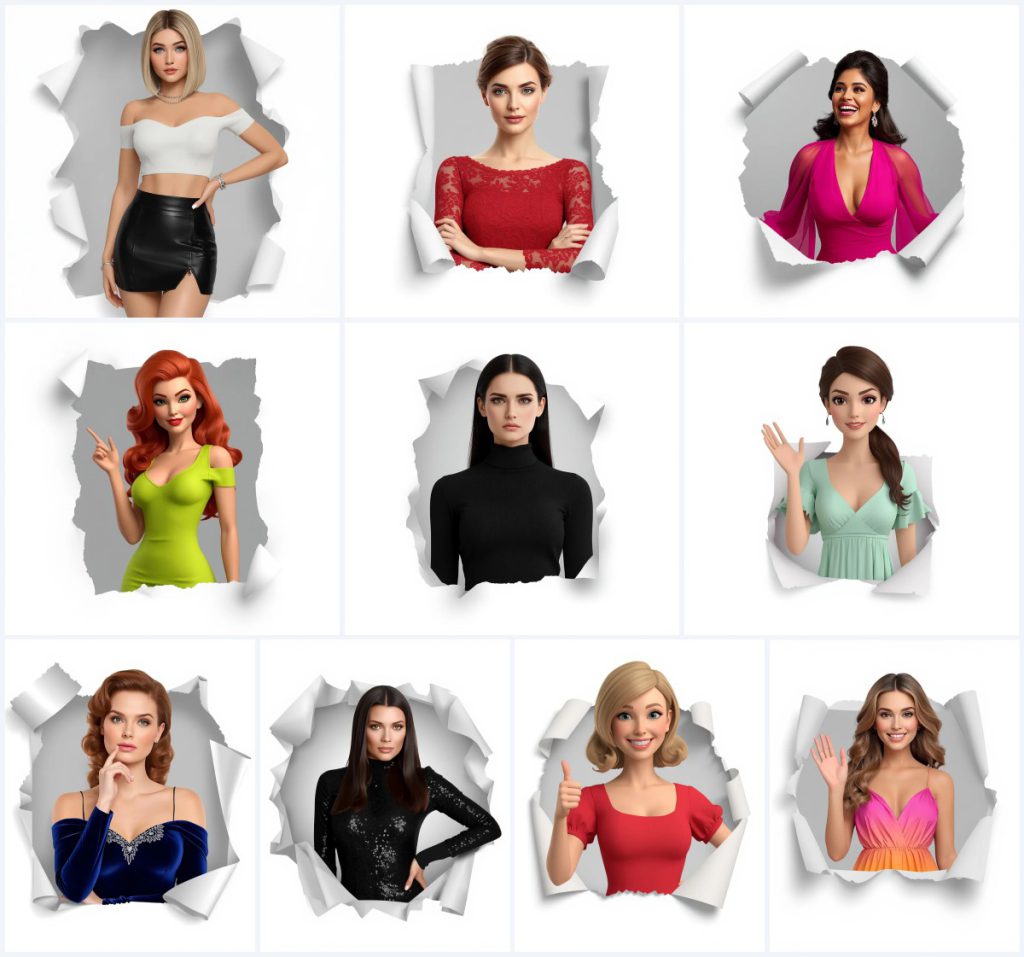
This collection gathers ten AI image prompts that place a beautifully styled woman at the center of a dramatic visual trick: she appears to push through a torn paper hole, her half-body breaking the flat surface with realistic ripped edges. Each prompt names a distinct outfit, hair color, eye color, and pose, from a black leather mini skirt to a flowing mint green maxi dress. The shared scene is always the same torn-paper frame with a subtle light grey gradient inside the hole, soft lighting, and a strong sense of 3D depth.
The prompts are written for digital illustration and photo-editing workflows, so they work best when you feed them to tools that can blend a generated subject with a paper-tear effect. Some prompts lean toward fashion editorial energy, others toward calm elegance or playful joy. Because every prompt repeats the torn paper hole and the half-body emergence, the collection feels like a single series with ten different moods. You can use them one by one or mix the outfit and expression details to build your own variants.
What this torn-paper portrait collection is asking for
Each prompt in this set describes a beautiful woman with specific hair and eye colors, a named outfit, and a clear emotional pose. The woman always emerges through a torn paper hole with realistic ripped edges that wrap around her half-body. The interior of the hole shows a subtle light grey gradient, and the lighting is soft, which keeps the focus on her face and clothing. The prompts mix fashion language with portrait language, so you get both a wardrobe description and a mood description in one block.
- A torn paper hole with realistic, ripped edges wrapping around the woman's half-body.
- A subtle light grey gradient color inside the torn hole.
- Specific hair styling such as a modern bob, a chic updo, or glamorous waves.
- Named outfits like a black leather mini skirt, a crimson lace dress, or a fuchsia gown.
- Poses that range from arms crossed and thumbs-up to a gentle wave or a playful wink.
- Soft lighting that creates a palpable 3D depth and makes the subject pop from the surface.
The torn paper scene and the women inside it
Every prompt builds the same stage: a flat paper surface with a hole ripped through it, and a woman leaning out as if the page itself has opened for her. The phrase "emerges through a torn paper hole with realistic, ripped edges" repeats across the set, and that repetition is the collection's signature. Inside the hole, the description calls for "a subtle light grey gradient color," which keeps the background quiet so the clothing and face carry the image.
The women themselves change dramatically from prompt to prompt. One wears a "chic black leather mini skirt" with a fitted white off-shoulder top, while another stands in a "striking crimson red lace cocktail dress" with arms crossed. A third is caught in "pure, radiant happiness" in a fuchsia gown, and a fourth winks while pointing upward in a lime green bodycon dress. The contrast between the calm grey interior and the vivid outfits is what gives the series its energy.
Why this collection works for digital portraits
The torn-paper device is a simple but powerful way to add depth to a flat portrait. It gives the viewer a reason to believe the woman is breaking out of the image rather than sitting inside it. Because the prompts specify ripped edges and a grey gradient, the AI has clear instructions for creating that illusion without needing complex background scenery. The result is a portrait that feels physical and immediate.
- The torn paper hole creates instant 3D depth, making the subject pop from the surface without a busy background.
- The repeated grey gradient inside the hole keeps attention on the woman's outfit, hair, and expression.
- Each prompt pairs a strong fashion look with a clear emotion, so the series stays varied while the frame stays consistent.
Three styles that fit this torn-paper portrait set
This collection supports three main styles, and each one stays inside the prompt's own language. You do not need to add new props or scenes. The torn paper hole, the grey gradient, and the soft lighting are already there, so the style choice is mostly about how polished or playful you want the final image to feel.
- Fashion editorial: Lean into the named outfits like the black leather mini skirt or the crimson lace dress and keep the pose cool and direct, as the prompt already describes.
- Soft glamour portrait: Use the soft lighting and the subtle light grey gradient inside the torn hole to create a gentle, flattering look around the face and hair.
- Playful character card: Push the expressive poses, such as the wink with a pointing finger or the enthusiastic thumbs-up, so the torn paper frame feels like a lively character reveal.
How to run these prompts step by step
The workflow is simple, but the order matters. Start by choosing one prompt from the collection and copying it exactly, because the torn paper hole and grey gradient details are easy to lose if you paraphrase. Then upload a reference photo if you want a specific face or body shape. Generate the image, and before you accept it, check the hands, the face, and the main object, which here is the torn paper hole itself. The ripped edges should look natural, not like a clean cut.
- Pick one prompt. Choose a single card from the collection, such as the crimson lace dress or the mint green maxi dress, and copy its text exactly.
- Upload a reference. If you need a specific face or pose, upload a clear reference photo so the AI can match the hair color and expression you want.
- Generate the first pass. Run the prompt in your chosen tool and let it produce a full image before you judge any single detail.
- Check the hands. Look closely at fingers and wrists, because poses like the thumbs-up or the hand on the hip often produce extra or merged fingers.
- Check the face. Make sure the eyes, mouth, and hair match the prompt, and that the expression reads as calm, joyful, or playful as described.
- Check the main object. Inspect the torn paper hole and its ripped edges, and confirm the subtle light grey gradient is visible inside the hole.
Choosing a reference photo for these prompts
A reference photo is optional, but it helps if you want a consistent face across several images in the series. The prompts already describe hair color, eye color, and pose, so your reference should not fight those details. Pick a photo with even lighting and a clear view of the face and upper body, since the torn paper hole only shows the half-body.
- Use a front-facing or slightly angled portrait so the AI can read the face and hair clearly.
- Avoid heavy shadows or colored lights that would clash with the soft lighting described in the prompts.
- Keep the reference simple, because the torn paper hole and the grey gradient already provide the visual interest.
Which tools handle this collection best
Different tools interpret the torn paper hole and the fashion details differently. ChatGPT and Google Gemini are useful for refining the prompt text and checking whether the outfit and pose are described clearly. Leonardo AI and Midjourney tend to produce stronger visual results for the 3D depth and the ripped edges. The table below compares access, typical realism, and what each tool is most useful for with this specific set.
| Tool | Access | Typical realism | Useful here for |
|---|---|---|---|
| ChatGPT | Free and paid tiers | Moderate, improving with image models | Rewriting the prompt so the torn paper hole and the subtle light grey gradient stay intact. |
| Google Gemini | Free and paid tiers | Moderate to high | Checking that the named outfit, such as the black leather mini skirt, matches the generated image. |
| Leonardo AI | Free credits and paid plans | High for digital illustration | Rendering the ripped edges and the 3D depth that makes the woman pop from the surface. |
| Midjourney | Paid subscription | Very high, with strong stylization | Producing the soft lighting and the realistic torn paper hole around the half-body. |
Three tips for cleaner torn-paper portraits
Small adjustments make a big difference with this collection. The prompts are detailed, so you should protect the details that matter most: the ripped edges, the grey gradient, and the specific clothing. If you change too much at once, the torn paper illusion can collapse into a simple cutout.
- Keep the phrase about the torn paper hole and its realistic ripped edges in every generation, because that is the anchor of the whole series.
- When you adjust an outfit, stay close to the original material, such as the black leather mini skirt or the crimson lace dress, so the fashion language remains consistent.
- Check the subtle light grey gradient inside the hole after each run, since some tools will replace it with a solid color or a busy background.
Common problems and what to change
These prompts can fail in predictable ways. The torn paper edge may look like a clean cut, the hands may merge, or the grey gradient may disappear. The table below lists the most common issues and the specific change that usually fixes them.
| Issue | What to change |
|---|---|
| The torn paper hole looks like a smooth cutout | Add or repeat the words realistic, ripped edges and ask for uneven paper fibers around the opening. |
| The hands are distorted in poses like the thumbs-up or the hand on the hip | Simplify the hand position, or regenerate with a clearer description of the fingers and wrist. |
| The subtle light grey gradient inside the hole turns into a flat color | Restate the gradient in the prompt and remove any background words that might compete with it. |
| The outfit color or fabric does not match the named dress | Copy the exact clothing phrase, such as vibrant fuchsia pink gown or black sequin cocktail dress, and avoid paraphrasing. |
Frequently Asked Questions
Can I use these prompts for a single image instead of a series?
Yes. Each prompt works on its own, but the torn paper hole and the grey gradient are shared across the set, so using two or three together gives you a consistent series with different outfits and moods.
Do I need a reference photo to get the torn paper effect?
No. The effect comes from the prompt text, especially the phrase about the torn paper hole with realistic ripped edges. A reference photo only helps if you want a specific face or hair color.
Why does the prompt mention a subtle light grey gradient inside the hole?
That gradient keeps the background quiet so the woman's outfit and expression stay dominant. Without it, the AI may fill the hole with a busy scene that distracts from the subject.
Conclusion
This collection of ten prompts is a tidy package for anyone who wants fashion-forward digital portraits with a built-in 3D trick. The torn paper hole, the realistic ripped edges, and the subtle light grey gradient give every image a consistent frame, while the outfits and poses keep the series varied. Start with one prompt, check the hands, face, and torn paper hole, and then expand into the rest of the set.
Only edit photos you have the right to edit, and respect the photographer and the people in the frame.